Friday, May 6, 2016

Books about friendship


Books about friendship have always had a special place in the world of children’s literature. Who out there cannot relate to the friendship between Wilbur and Charlotte or the unusual friendship between George and Martha or the more recent Herman and Rosie (Gordan). We all need our friends and the special friendships we form in childhood often stay with us, giving us old and new memories to share as we age. Here are a few new books about friendship both within and outside of the family. My only concern is that all of these books focus on the friendships of boys. Only Lenny and Lucy includes a female within the friend mix, but that character does not enter until the last few pages of the book. Come on, authors, let’s support girl friendships as well!

Big Friends by Linda Sarah and Benji Davies
http://images.macmillan.com/folio-assets/macmillan_us_frontbookcovers_1000H/9781627793308.jpg
If you have ever experienced a great friendship that is disrupted when a third person joins in, this book is for you. Birt and Echo are “Big Friends” spending every minute together having adventures on Sudden Hill with their cardboard boxes. When Shu joins them, the rhythm changes and Birt feels left out. Luckily for Birt, both Shu and Echo joyfully encourage Birt to rejoin the group and now the adventures have three. A happy story of friendship gone right. A great classroom read when children seem to be forming alliances for and against one another. Big Friends shows how friendship can expand to reach more than two.

Lenny & Lucy by Philip C. Stead, Illustrated by Erin E. Stead
Lenny & Lucy
When Peter and his family move to a new house, he is not happy and the dark woods on the other side of the bridge outside his window keep him awake at night. Peter and his dog Harold build Lenny first as a guardian of the night, but when that does not seem enough, they build Lucy as well. Finally, Millie, the girl next door comes over offering her binoculars “and a bag of marshmallows, too.” This nascent friendship is barely described and occurs on the last few pages of the book. But, it is compelling and begs to be continued. This award winning husband and wife team have once again connected with both children and adults in a story about moving, loneliness, fear and ultimately friendship.

How to Share with a Bear by Eric Pinder, Pictures by Stephanie Graegin
How to Share with a Bear
Thomas builds a cave of blankets and pillows in his living room, but finds that a little bear has invaded his space. What follows is a bunch of tricks on Thomas’ part to get the bear out of the cave. While Thomas devises clever ploys, the bear always seems to be one step ahead of him and his time alone in the cave is short. Toward the end of the book, the reader realizes that the bear is a younger sibling making the book so much more meaningful and poignant. A sweet way to introduce sharing space and objects with younger siblings as well as the idea that a brother or sister could be a good friend.

Love Monster and the Last Chocolate by Rachel Bright
Love Monster and the Last Chocolate
Love Monster is returning home after a long trip, only to find a box of chocolates on his doorstep. Imagining sharing this box of chocolates with his friends, Love Monster quickly realizes that if he shares, he might not get the chocolate that he wants. When his queasy stomach will not allow him to keep the chocoaltes to himself,  Love Monster runs to his friends eager to share his gift with them. When he finds his friends, they are busy getting ready for a party to welcome him home. Opening the box of chocolates, he discovers that his friends have saved one last chocolate for him and it is his favorite: Double Chocolate Strawberry Swirl! Oh, to have friends who know what our favorites are and who save our favorites just for us!

Dear Yeti by James Kwan
Dear Yeti
Two young hikers are on an adventure and looking for Yeti, a beat of the mountains. Yeti proves to be elusive until the hikers are in danger of being eaten by a bear. Then he appears and politely asks the bear not to eat his friends. Sweet drawings and simple language told largely through notes the hikers write to Yeti.
.Kwan’s first picture book sets him up for a long career writing and illustrating for children.

Time for  Cranberries by Lisl H. Detlefsen, Illustrated by Jed Henry
Time for Cranberries
When I first glanced at the picture of the front of this book, it made me think of the commercials for Ocean Spray Cranberry Juice. The author who lives on a cranberry farm with her husband and two sons describes the process of harvesting cranberries through words, pictures and interactions between three family members: father, mother and school-aged son. For those who live on farms, the hard work and use of large machinery will be recognized. For those who do not, the depictions of harvesting just one of our many food crops will open their eyes to the hard work and sheer joy involved. While no child friends are shown in this book, the young boy has a great friendship with his parents as they obviously love doing what they are doing.

Tuesday, April 19, 2016

Books with a Lesson


While there are beautiful children’s books that simply tell a good story, there are many others that build a lesson into the story that’s being told. The books on this page teach a lesson, whether it is that it is as profound as “It’s okay to be biracial” or as simple as “Moving is hard, but we all have to do it some time” these books tell a story, teach a lesson and entertain us in the meantime. Enjoy these lesson teaching books!

Mixed Me! By Taye Diggs, Illustrated by Shene W. Evans
Mike is a mix of his dark-skinned dad and his red-headed mom. He likes who he is and does not want to be forced to choose one race or one group of friends. While the text is short, it is to the point. As Mike says at the end: “They call me Mixed-up Mike, but that name should be fixed. I’m not mixed up, I just happen to be mixed.”

Peep and Egg: I’m Not Hatching by Laura Gehl, Pictures by Joyce Wan
Peep wants Egg to hatch so they can enjoy the world together, climbing to the top of the barn to watch the sunrise, or riding on the back of a sheep. But Egg is afraid of coming out into the world. A great book for young ones who seem to be afraid of many things. The final page shows Peep and Egg as a newly hatched chick sitting on the roof of the barn, reading a book and eating a picnic: enjoying life together!

Before I Leave by Jessixa Bagley
For all those children who have to move and leave their best friends behind! Hedgehog and her family are leaving best friend, Anteater. While Hedgehog insists that she is not going, she continues to pack and eventually is forced to leave with her parents. What she does not know is that there are notes in her suitcase from Anteater. These notes decorate her new room and remind her that she has a best friend back home. A good companion book to Alexander, Who’s Not (Do You Hear Me? I Mean It!) Going to Move by Judith Viorst.

The Toy Brother by William Steig
Originally published in 1996 by acclaimed children’s book author, William Steig, The Toy Brother tells the story of Yorick and Charles, two brothers who do not see eye to eye. When their parents go away to attend a family wedding, Yorick, the older brother, plays around in his father’s laboratory and succeeds in shrinking himself. Younger brother Charles takes good care of him and even fantasizes about Yorick staying small forever, so Yorick can no longer ignore him. Shades of “Honey, I’ve Shrunk the Kids” here, but on a simpler, less complex plane. Lesson: don’t mess with your dad’s stuff!

The Tale of Tricky Fox Retold by Jim Aylesworth, Illustrated by Barbara McClintock
Aylesworth retells the tale of Tricky Fox with animation and verve. Both the prose and the brief bits of song move the story forward and make for an interesting read. McClintock uses motion and facial expressions to match the animation of the words. The light orange background and the limited color palette combine to pleasing effect. This will go to the top of the list when working on folk tales and trickster tales. As with all trickster tales, there is a lesson for the tricker: don’t get too cocky; and a lesson for the tricked: when you don’t tell the truth, you open yourself up to the trickers of the world.

You’re Here for a Reason by Nancy Tillman
 
With Tillman’s trademark illustrations and rhyming verse, You’re Here for a Reason gives anyone who has had a bad day a chance to see that even when a day goes wrong, “To somebody else, you will always be strong!” The message here, as in all Tillman’s books is “You are loved!” Who can resist that?


I Used to be Afraid by Laura Vaccaro Seeger
A young girl has many fears, but each one is reconciled through pictures and clever cutouts. “I used to be afraid of spiders, but not anymore.” Sets the stage for repetitive language. However the illustrations are anything but repetitive. Each page turn leads to another discussion. Why does the beauty of the spider web lesson the girl’s fear? What did she do so she is not afraid of being alone?  Lesson: deal with your fears head on.

It’s Not Easy Being Number Three by Drew Dernavich
Number three is tired of being a number, he feels taken advantage of and underappreciated. In a weird, surreal way, Number Three explores other options. Clever artwork and imagination show how three can be any number of things, from the hem of a scalloped skirt to the bottom of an anchor. But, nothing seems to satisfy Three, until he becomes a bronze statue in a park. There he is appreciated and looks forward to the many adoring crowds. But, when winter comes, he is once again left alone. Although the other numbers beg him to come back, he refuses, until finally, he realizes that without a number Three, the world really cannot go on, or at least the Fair cannot go on. Lesson: be sure to be who you are; stick with what you know; be adventurous, but always return to your roots? Who knows?

Monday, April 4, 2016

Board books to keep us from getting bored


Board books are for the youngest readers and started out as the simplest books, often with only one or two words on a page. Recently, publishers are reprinting books for young children in a board book format. Because these books tend to be smaller than regular children’s books, not all books translate well to this format. I have put these books in order from those that work best in this format to those that would be best left alone (either not pushed into a board book format, or not reprinted at all). When looking for a good board book for the youngest readers, consider the color palette (limited colors is best), the potential for interactivity (can you engage the child in the book easily?) and simple language and concepts (are the concepts presented appropriate for readers aged 2 to 4?).

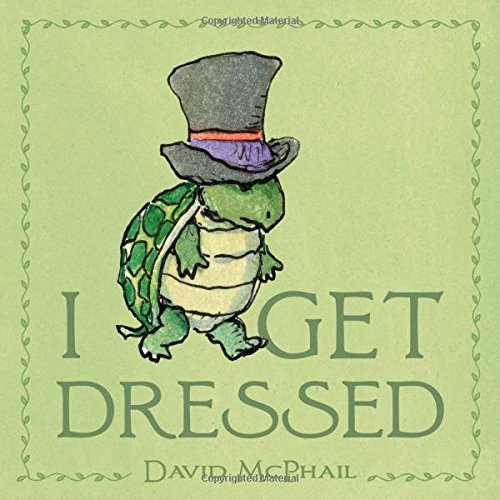
I Get Dressed by David McPhail
I Play by David McPhail
http://images.macmillan.com/folio-assets/macmillan_us_frontbookcovers_1000H/9781626725089.jpg 
In I Get Dressed, each page has one animal from David McPhail’s Nursery Rhyme collection and each animal has one item of clothing: shirt, pants, socks, tie, etc. Simple drawings and simple words, for our youngest ‘readers.’
In I Play, the little bear is featured with one simple verb per page, cutely illustrated by bear singing, running, and even reading.
While there is not much here, both of these books can be very interactive and lead to active play, a good combination of reading and active moving! Three stars for meeting three of the criteria listed above!

Night Owl by Toni Yuly
http://images.macmillan.com/folio-assets/macmillan_us_frontbookcovers_1000H/9781250054579.jpg
Baby Night Owl is waiting for Mommy Owl to come home, listening to all the night sounds and hoping that he will soon hear Mommy Owl. Using a limited color palette, Yuly illustrates this uncomplicated story with orange, yellow, black and purple simple line drawings. Many opportunities for interaction here as the different sounds are questioned and identified. Whoo wants to read about Night Owl? Another three star book!

Close Your Eyes by Kate Banks, Pictures by Georg Hallensleben
http://images.macmillan.com/folio-assets/macmillan_us_frontbookcovers_1000H/9780374313821.jpg
Little Tiger is reluctant to close his eyes as he prepares to go to sleep. Anyone who has had a conversation with a child where one answer leads to three more questions, will recognize Little Tiger in their own child. Mother Tiger has all the answers and finally convinces Little Tiger to go to sleep. The images in both words and pictures are poetic while still being easily understood by the youngest listeners: “You can even float among the clouds, and when night comes, the moon will hold you in its lap.” Three stars.


Mimi and Bear in the Snow by Janee Trasler
http://images.macmillan.com/folio-assets/macmillan_us_frontbookcovers_1000H/9780374349714.jpg
Mimi is a rabbit with human features who carries Bear with her wherever she goes. But, when she takes Bear out to play in the snow, she leaves him behind. After a careful search, she finally finds Bear and starts carrying him in a backpack so he won’t get left behind again. A perfect story for any child who has a special stuffed animal that goes everywhere with him/her. Three stars.

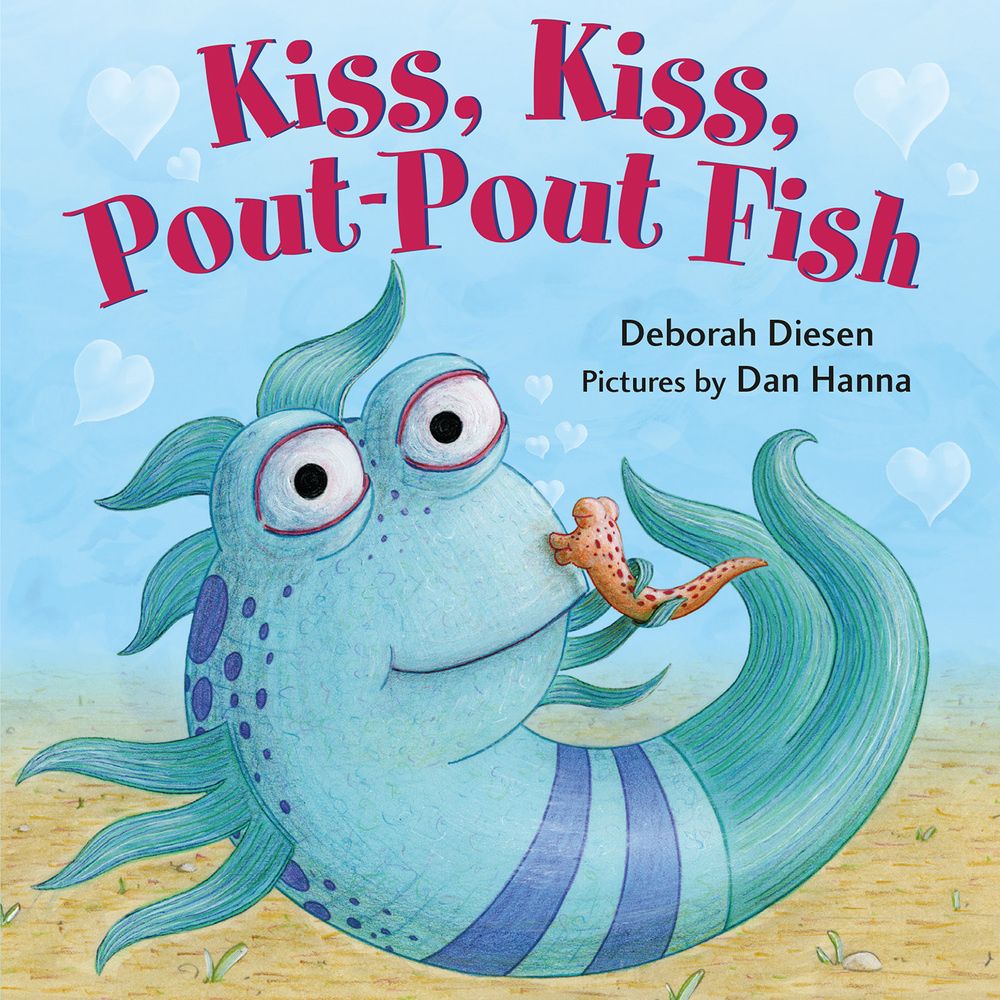
Kiss, Kiss, Pout-Pout Fish by Deborah Diesen, Pictures by Dan Hanna
The Pout-Pout Fish in the Big-Big Dark by Deborah Diesen, Pictures by Dan Hanna
Kiss, Kiss, Pout-Pout Fish  The Pout-Pout Fish in the Big-Big Dark
Pout-Pout Fish has many adventures, all in rhyme and all below the sea. You will meet a variety of fish swimming and working together in both of these sweeter than sweet stories. If you like to rhyme and have the time, you’ll be right in the swim of things with these two new stories. One star for the potential for interactivity.

I’d Know You Anywhere, My Love by Nancy Tillman
The Spirit of Christmas by Nancy Tillman
I'd Know You Anywhere, My Love  The Spirit of Christmas
Nancy Tillman is known for her beautiful illustrations and her sweet sentiments. While some books do not translate into board books as easily as others, I’d Know you Anywhere, My Love works perfectly with smaller renditions of her artistry and a tiny font for her rhyming lines. A book to be told with copious amounts of hugs and kisses.
The Spirit of Christmas, on the other hand,  is clearly told for the adult and not so much for the child. The rhymes are sometimes saccharine, “He spoke to me then/ in a whisper of wings./ “There are gentle things/ the season brings.” And the pictures alternate between artful realism and fancifully stylized. As a Christmas book, it has my vote for when I am looking for a way to express how I miss the children in my life at that time of year. One star for the potential for interactivity.


Digger Man by Andrea Zimmerman and David Clemesha
 Digger Man
Following in the footsteps of Train Man and Fire Engine Man, Digger Man follows big brother on his adventures with a large earth mover as he scoops rocks, pushes mud and honks his horn. The main character is always concerned about his little brother and wants to be sure to teach his brother how to work with the digger! One star for simple language.

Firebears: The Rescue Team by Rhonda Gowler Greene, illustrated by Dan Andreasen
 Firebears, the Rescue Team
The firebears have a number of adventures, fighting fires, rescuing other bears and even helping a cat stuck in a tree. Told in simple rhymes, the story moves quickly from one emergency to another. Brightly colored illustrations support the text and help to tell the story. Classrooms that have units on community helpers would love this book. Since the bears are not explicitly gendered, it could be a good tool for talking about both firemen and firewomen. One star for simple language.

This Plane by Paul Collicutt
http://images.macmillan.com/folio-assets/macmillan_us_frontbookcovers_1000H/9780374359874.jpg
While the language is simple, the concepts here are not. Colorful images of different types of planes accompany each page where a plane is described in plain text. Little ones will love the colors and the variety of planes. Older toddlers will be interested to learn more about the different kinds of planes. Be prepared for a multitude of questions. One star for simple language.

Tractor Mac Farm Days by Billy Steers
Tractor Mac Farm Days
A shortened version of a Tractor Mac story, just right for toddlers. The anthropomorphized tractor is a busy as can be as he plows, plants, grades and scoops. Just another busy day on the farm! One star for simple language.


At the Supermarket by Anne Rockwell
http://images.macmillan.com/folio-assets/macmillan_us_frontbookcovers_1000H/9781627793155.jpg
A little boy accompanies his mother to the supermarket, telling about the groceries he bought, including the necessary ingredients for making a cake, just in time to celebrate his birthday the next day. As I read through this, I wondered: who still eats meat every day? Where are all the black and brown people? There is one Asian looking woman working at the register and one or two other darker skinned people, most seem to be working rather than shopping. The back of the book indicates that the books was first published over forty years ago. While it is a cute story and one that many children can relate to, the lack of diversity makes me think this should be a book that can be kept on the shelf. Can’t give any stars to this one. Let’s leave this book back in the seventies!


Thursday, March 17, 2016

It's March, let's read!


Books abound for young readers and listeners. No matter what interests your young readers, you will find something here to keep them interested. Patterns, animals, real and imaginary, and interactive books that travel with you through a rich landscape: who could ask for anything more? 

I See a Pattern Here by Bruce Goldstone
I See a Pattern Here
Using famous works of art as well as patterns found in nature, Goldstone explores how color, shape and repetition can work together to form beautiful patterns. Throughout the book, he also gives definitions and examples of mathematical terms. This would be a super book for any math teacher and useful with children in  primary and intermediate grades.


If I Were a Lizard by Lauren Gates Galvin

 If I Were a Lizard
A simple board book with extraordinarily read and colorful pictures of a variety of lizards. Galvin manages to catch the eerie stare of the lizard seeming to view life with a grouchy demeanor, while conveying oodles of facts about these real-life prehistoric creatures. Perfect for preschoolers to catch their attention, but also useful to introduce older children to a unit on amphibians.

Woodpecker Wham! By April Pulley Sayre, Illustrations by Steve Jenkins
Woodpecker Wham!
With Jenkins’ bright paper collage images, how could this book go wrong? And Sayre’s words are an equal complement to the gorgeous illustrations of woodpeckers in a variety of environs. Each page includes a short poem with strong words to spike the interest of little ones who like birds, and maybe even those who don’t. “Raise that crest./ Bob and Bow./ Flash those wings./ It’s time to wow!” The author ends with several pages of facts about woodpeckers as well as a list of further reading, both books and websites.

Your Baby’s First Word Will be Dada by Jimmy Fallon, illustrated by Miguel Ordonez
Your Baby's First Word Will Be DADA
In the tried and true silly fashion of Jimmy Fallon, this book progresses through a number of baby animals. Each animal’s father is dictating, “Dada!” To which the baby replies, “Moo” or “Quack” of “Bzzz.” Every parent wants to hear his baby (or her baby) say Dada or Mama first, Fallon just voices this desire. And who other than a celebrity would be able to get a children’s book published based on a silly idea?

I, Fly: The Buzz about Flies and How Awesome They Are by Bridget Heos, 
Illustrated by Jennifer Plecas
I, Fly: The Buzz About Flies and How Awesome They Are
A multi-racial classroom plus a talking fly gives you a book with all you need to know about flies. Just like butterflies, they go through the process of metamorphosis, but according to the talking fly, they are so much cooler and useful to society. Several cool facts come to the surface here including the fact that one fly can have 191 gazillion offspring in a matter of 30 days or less. Makes you wonder why the world is not awash with flies, doesn’t it. My mother used to pay us 1 penny for every fly we killed. Should have bred them, then killed the majority and I’d be a rich woman today!

Spare Parts by Rebecca Emberley and Ed Emberley
 Spare Parts
Rebecca and Ed Emberley are a daughter/father team who have done some wonderful picture books with simple drawings and engaging text, notably The Crocodile and the Scorpion and other traditional tales. Spare Parts features a robot who is missing a part, and spends the pages of the book trying to locate a heart. The story here is more complex than their other works, and the pictures are busy to the point of being confusing. Oh, for the simple drawings found in the other books where they have teamed up! While this is not appealing to me, I will check it out with the grandson and won’t be surprised if he loves it!

Hedgehugs by Steve Wilson and Lucy Tapper
Hedgehugs
For a family with hedgehogs on the family crest, there is nothing cuter than a hedgehog, unless it is a book with hedgehogs trying to hug. The solution to put on a sock and nibble out the heel, then snuggle up close without those pesky spikes. Love this book and not just because the hedgehogs are so cute.

We’re in the Wrong Book by Richard Byrne
 We're in the wrong book!
Another Postmodern offering from Richard Byrne, the author of This Book Just Ate my Dog!  Bella and Ben are back, jumping across the page of the book when Bella’s dog knocks them off the page and into another book. Jumping, hopping, sailing and flying from page to page, they get to see the Egyptian pyramids, Little Red Riding Hood, and pastoral nursery rhyme lands. Eventually they find their way back to their original book and Bella’s dog. A fun way to explore different genres all within one original book. Hoping Bella and Ben will return again!


Friday, March 11, 2016

A Bodacious Collection of Biographies!

Picture book biographies are growing every year and more and more these books are branching out from the traditional books about white men. The current collection has almost as many women as men, but unfortunately only includes one person of color. It does include one biography of a fictional bear and how he came to be world famous. I enjoyed reading biographies as a child and this new crop of books had many pages to savor. I hope you find something to enjoy here as well. Starting with the women:


Queen of the Diamond: The Lizzie Murphy Story by Emily Arnold McCully
Cover12.75x11 in
I don’t know about you, but I have never heard about Lizzie Murphy or the fact that she played on semi-pro and professional ball teams along with men in the early 1900s. McCully writes and illustrates the story of Murphy from her beginnings playing ball with her brother through her career as a professional ball player for 17 years. Murphy not only stepped up to the plate to hit the ball, she also stood up for herself as a wage earner, standing up to her first manager who thought he could get away without paying her. Murphy demanded wages equal to what the men were earning. I loved reading this story and will share it with as many as I can. It will be a precious addition to my biography collection!

The House that Jane Built: A Story about Jane Addams by Tanya Lee Stone, 
Illustrated by Kathryn Brown
The House That Jane Built
When I was a child, I read a biography of Jane Addams. For some reason, I thought I had “discovered” her and I fell just a little bit in love with her passion for the poor. She was and is an inspiration to me. This new picture book biography is well written with Jane being presented as a strong woman who knows her own mind. The pictures show both boys and girls of a variety of races and the text treats all people with respect, just as I am sure Jane would have done.

Beatrix Potter and Her Paint Box by David McPhail
Beatrix Potter and Her Paint Box
With McPhail’s characteristic drawings, this book is true to the art form of Beatrix Potter, with muted backgrounds and soft pastels telling the story with pictures as well as words. Potter was an avid painter from a young age and is portrayed here as a child who knew her own mind, loving her family and animals and not needing others to enter her life. While this book is not as small as the traditional Potter books, it is smaller than the normal picture book, showing how McPhail tried to honor the artist as he tells her story.

Mary Cassatt: Extraordinary Impressionist Painter by Barbara Herkert, 
Paintings by Gabi Swiatkowska
Mary Cassatt
Born in Pennsylvania in 1844, Mary Cassatt became one of the best known painters of her era and one of the very few women of her time to make a name for herself as an artist. Herkert and Swiatkowska team up to tell her story with an impressionistic flair in both words and pictures. The art work fairly shows how the work of Cassatt fit into Impressionistic format and the text uses a free verse poetic approach that draws the reader in with the use of direct quotes and many exclamation points. Makes me want to run out to a museum. See you there!

 And now for the men: 

Elvis: The Story of the Rock and Roll King by Bonnie Christensen
Elvis
A short biography of The King’s early life beginning with his birth and ending with the start of his musical career. Pressley was a phenomenal musician which is conveyed in this modest story. Both the art work and the text are portrayed in an unsophisticated style, with muted colors and simple words; the author often uses incomplete sentences to convey the message: “Didn’t know the words…” and “Shy, quiet, dreamy boy, that Elvis.” A timeline of his life is given at the end of the book along with a few more details of his career in music. While this is an interesting portrayal of Elvis, it is not my favorite portrayal of his life. 

The Fantastic Ferris Wheel: The Story of Inventor George Ferris by Betsy Harvey Kraft, 
Illustrated by Steven Salerno
The Fantastic Ferris Wheel
The Eiffel Tower was the grand accomplishment of the World’s Fair in Paris in 1889. The developers for the Columbian Exposition of 1893, otherwise known as the Chicago World’s Fair, wanted something even more spectacular. And they got it with the first ever observation wheel that could hold thousands of people at a time. Eventually named a Ferris Wheel after its inventor, the observation wheel was a huge hit! This is the story of how George Ferris invented and built the first Ferris Wheel, one of the favorite rides at most small and large fairs. 

W is for Webster: Noah Webster and His American Dictionary by Tracey Fern, 
Pictures by Boris Kulikov
W Is For Webster
The story of the first man to write a dictionary for American English, this is a fascinating book about a man too smart for his surroundings and quite obnoxious as well. Webster’s drive to write and publish a dictionary is well told and the illustrations make clever use of design, as the cover art shows with the first half of the W turned into a dictionary. A great addition to any collection of picture book biographies. 

 
How Jelly Roll Morton Invented Jazz by Jonah Winter, Illustrated by Keith Mallett
JellyRoll
Based on the life of Jelly Roll Morton, this is told as a what if, and let’s say kind of story. While the illustrations show real faces, worn by worries and time, they also have a dreamy quality to go along with the dreamy tone of the story. This is a perfect choice for those kids who love music, particularly jazz, or those older students who are doing presentations on musicians, or historical figures.  The end notes help straighten out the truth from the make-believe and give ideas for music that can be listened to when reading this book. A perfect addition to the biography shelf.

Aaron and Alexander by Don Brown 
Aaron and Alexander
The story of two men who had much in common and both worked hard to help establish a new nation, yet their disagreement over politics led to a duel that ended with the death of Hamilton and the political ostracism of Burr. Except for the duel part, this sounds all too familiar to those of us going through a presidential election cycle. The name calling, the vitriol, the self-righteousness of the candidates sounds just like that portrayed here. A great historical book, not quite a biography, but well told and a great resource for any class studying early American politics.

And now for the Bear: 

Winnie: The True Story of the Bear who Inspired Winnie-the-Pooh
By Sally M. Walker, illustrated by Jonathan D. Voss
Winnie: The True Story of the Bear Who Inspired Winnie-the-Pooh
Part biographical, part historical, this is the story of how Winnie, an American Black Bear came to be in the London Zoo when Christopher Robin Milne was a young boy. Harry Colebourn was a veterinarian in the Canadian Army Veterinary Corps when he saw Winnie on the platform of a remote train station. A hunter had shot Winnie’s mother and he was offering to sell the bear cub who could not survive on her own in the wild. Harry bought the cub and named her Winnipeg, which was soon shortened to Winnie.  As World War I heated up, Harry and his Corps were sent to England, and they took Winnie with them. Ultimately, Harry had to leave Winnie at the zoo when he was sent to the front in Europe. And the rest, as they say, is history. The front piece and the end piece of the book have photos of Harry, Winnie and the Milnes, and Walker includes endnotes with facts that were not contained in the story. Any adult or child who has enjoyed the Pooh stories will delight in reading about the true life Winnie.


Tuesday, March 8, 2016

A flurry of board books for those who don't want to be bored!


Kiss, Kiss, Pout-Pout Fish by Deborah Diesen, Pictures by Dan Hanna
The Pout-Pout Fish in the Big-Big Dark by Deborah Diesen, Pictures by Dan Hanna
 Kiss, Kiss, Pout-Pout Fish | Deborah Diesen | Macmillan    The <b>Pout</b>-<b>Pout</b> <b>Fish</b> in the Big-Big Dark by Deborah Diesen
Pout-Pout Fish has many adventures, all in rhyme and all below the sea. You will meet a variety of fish swimming and working together in both of these sweeter than sweet stories. If you like to rhyme and have the time, you’ll be right in the swim of things with these two new stories.

The Spirit of Christmas by Nancy Tillman
 <b>The Spirit of Christmas</b> | Nancy <b>Tillman</b> | Macmillan
Another story in rhyme by the author of On the Night You Were Born. While this is presented as a board book, it’s clear that the story is told for the adult and not so much for the child. The rhymes are sometimes saccharine, “He spoke to me then/ in a whisper of wings./ “There are gentle things/ the season brings.” And the pictures alternate between artful realism and fancifully stylized. As a Christmas book, it has my vote for when I am looking for a way to express how I miss the children in my life at that time of year.

At the Supermarket by Anne Rockwell
Anne Rockwell; illustrations by Anne Rockwell At the Supermarket
A little boy accompanies his mother to the supermarket, telling about the groceries he bought, including the necessary ingredients for making a cake, just in time to celebrate his birthday the next day. As I read through this, I wondered: who still eats meat every day? Where are all the black and brown people? There is one Asian looking woman working at the register and one or two other darker skinned people, most seem to be working rather than shopping. The back of the book indicates that the books was first published over forty years ago. While it is a cute story and one that many children can relate to, the lack of diversity makes me think this should be a book that can be kept on the shelf.
Mimi and Bear in the Snow by Janee Trasler
Mimi is a rabbit with human features who carries Bear with her wherever she goes. But, when she takes Bear out to play in the snow, she leaves him behind. After a careful search, she finally finds Bear and starts carrying him in a backpack so he won’t get left behind again. A perfect story for any child who has a special stuffed animal that goes everywhere with him/her.

Close Your Eyes by Kate Banks, Pictures by Georg Hallensleben
Kate Banks; Pictures by Georg Hallensleben Close Your Eyes
Little Tiger is reluctant to close his eyes as he prepares to go to sleep. Anyone who has had a conversation with a child where one answer leads to three more questions, will recognize Little Tiger in their own child. Mother Tiger has all the answers and finally convinces Little Tiger to go to sleep. The images in both words and pictures are poetic while still being easily understood by the youngest listeners: “You can even float among the clouds, and when night comes, the moon will hold you in its lap.”

I Get Dressed by David McPhail
I Play by David McPhail
Get Dressed – David McPhail | Youth Services Book Review     First Experiences
In I Get Dressed, each page has one animal from David McPhail’s Nursery Rhyme collection and each animal has one item of clothing: shirt, pants, socks, tie, etc. Simple drawings and simple words, for our youngest ‘readers.’
In I Play, the little bear is featured with one simple verb per page, cutely illustrated by bear singing, running, and even reading.

Firebears: The Rescue Team by Rhonda Gowler Greene, illustrated by Dan Andreasen
... Gowler Greene; illustrated by Dan Andreasen Firebears, the Rescue Team
The firebears have a number of adventures, fighting fires, rescuing other bears and even helping a cat stuck in a tree. Told in simple rhymes, the story moves quickly from one emergency to another. Brightly colored illustrations support the text and help to tell the story. Classrooms that have units on community helpers would love this book. Since the bears are not explicitly gendered, it could be a good tool for talking about both firemen and firewomen.


Monday, November 23, 2015

Black Lives Matter

Between the World and Me by Ta-Nehisi Coates
Between the World and Me.jpeg

I usually use this space to write about children’s books and there are a ton of them waiting for me to write about. But, I need to share about a new book, Between the World and Me by Ta-Nehisi Coates that I finally finished reading this week. Coates, a black man raised in Baltimore, writes a letter to his son about growing up black in America.

This book is so profoundly sad and profoundly hopeful that I recommend it to all. It gave me, as a white woman, a clearer picture of what it means to feel neglected by the schools, supposedly put in place to educate ALL children. Coates writes, “I was a curious boy, but the schools were not concerned with curiosity. The were concerned with compliance.” At the same time, he was faced with the violence of the streets of Baltimore.

He describes seeing a boy of about 12 being teased outside a convenience store. Looking frightened, the boy finally pulls back his coat to reveal a gun. The teasing stops and for that day, the boy does not use his gun. But, as a young boy himself when he witnesses this, Coates is confronted with the reality of gun violence in his own backyard.

He descries the beatings from his father over seemingly small infractions, and how both his parents reiterate, either he will be beaten by his father, or he will be beaten by the police. To keep their boy safe, they discipline heavily. While he recognizes that he was beaten out of love, Coates still tells his son he was raised in a hard family and he had to learn how to love his own son in a different way.

And Coates describes how he feels to know that police officers all around our country are getting away with killing unarmed black men. Without going into details about the Michael Brown case, he does say, “Michael Brown did not die as so many of his defenders supposed. And still the questions behind the questions are never asked. Should assaulting an officer of the state be a capital offense?”   So many of us are quick to judge, but if that were our son, our brother, our nephew would the answer be the same? While most accounts show that Brown was not innocent, did he deserve to die? Coates recounts several instances of similar injustices. His writing is more organized and more profound than mine so I hesitate to say too much here as I can only take away from what he has to say, not add to it.

My sadness comes in the aftermath of the riots in Baltimore last April, and with the knowledge that the schools and the streets of this beleaguered city have not changed much since Coates was a boy here in the 1980s. But, my hope comes from the fact that in spite of the poor schools and because of the persistence of his parents, Coates has grown into a eloquent and profound writer who can lead us to truly know one another. I am not sure if Coates’ intention in writing this letter to his son is to educate those of us lucky enough to be born white. Whether or not this is his intention, he has succeeded in helping me to see so many things more clearly.

For anyone who does not understand why “Black lives matter” is an important rallying cry that should not be diluted by, “All lives matter” I recommend that you read Between the World and Me and any of Coates’ writing you can lay your hands on. While we know intellectually that all lives do matter, we, as a nation, still do not live/act/believe that black lives do matter. Coates will help you see the truth of this by exposing his own fears for himself and for his son. No one should have to live in fear because of the color of his skin. As a nation and as a city, we can do better.