Thursday, May 11, 2017

More books about friendship

Are you noticing a pattern here? As I read through the new picture books, I see so many that have a theme of friendship. And why not? Friendship is one of the most important concepts we can learn as young children, and for so many of us these early friendships can last a lifetime. For all my friends and their children and grandchildren, I hope these books will remind you of the power and love we get from our friends.

Love Monster and the Scary Something by Rachel Bright
Love Monster returns. This time he is trying to go to sleep and has completed all his before-sleep rituals, but nothing is working. He hears the scariest sounds and imagines the most frightening monster coming up his stairs. But, what is it coming to get him? Read and find out!

Samson in the Snow by Philip C. Stead
Words cannot really describe the illustrations in this book. Stead tells the story of a mastodon names Samson and his unlikely friendship with a red bird and a little grey mouse. Bright yellow and red are used in the fantastic illustrations of this story of friendship. I love this book and hope to share it with some children soon to see what they think of it.

Cat Nap by Toni Yuly
Kitten wants to play and Cat wants to nap. After a long game of hide and seek, both finally get to take a nap. Simple line drawings are filled with bright colors in a way that makes the reader think, “I could do that!” But, of course we could not do it so masterfully. A nice simple story of friendship.

Big Cat, Little Cat by Elisha Cooper
When the little cat comes into the big cat’s life, the big cat shows Little Cat the ropes, how to be and how to do;   they exist together for many years, until Big Cat grows old and dies. A wonderful circular story of pets, or are the cats substitutes for people? Many complexities from this simply story. Cooper likes to write about cats and she does so fantastically!

Little Bot and Sparrow by Jake Parker
Who would have thought a robot and a sparrow could be friends? In Parker’s imaginative tale, this is just what happens. As with Big Cat, Little Cat, the more experienced friend (sparrow) teaches the other (Little Bot) the ways of the world and the seasons come and go as the friendship waxes. How to be a friend would be another good title for this sweet and unusual book.

Sunday, February 26, 2017

Newbery Winners 2017


Newbery Winners for 2017

This year’s Newbery Winners seem to have a common theme. In general, the winners of this award can be all over the place with books of different genres and formats. And this year is no exception. A poetic picture book, a fantasy with witches and swamp monsters, another fantasy based on medieval France and a novel of historical fiction seem to have little in common. Yet, they all focus on oppression and in three of the books, the focus is on how children can work to overcome oppression. In fact, only in the magical fantasy book do the children have adult models of how to work against oppression.
Did these four books with these themes of oppression in common just happen to be published in this year? Did the Newbery committee choose these books because of the theme and what is happening politically in our country? Or is it all just a coincidence? It’s hard to say. But, either way, we have four beautifully written stories to share with all the children in our classrooms. And we can help them see the models in these books as a way to fight oppression in our own age. 
 

Another thing these books have in common is that they are all fantastic, which is what you would expect of Newbery winners. Yet, they are all fantastic in different ways. In The Girl Who Drank the Moon by Kelly Barnhill, a small village sits on the edge of a forest waiting in dread for the Day of Sacrifice which comes every year. The youngest baby is taken by the elders and left in the forest as a way to appease the evil spirits within. Yet, it turns out the evil spirits are those within the village and each year Xan, the good witch, takes the baby that is left as a sacrifice and finds a home for it. She often puzzles over the practice of leaving a baby to die at the hands of the beasts that roam the woods, but she does not hesitate to save the baby. On the year that Luna is born, Xan accidentally feeds her from moonlight rather than starlight and this sets in motion the beginning of the end, a tale that runs out when Luna is just shy of her 13th birthday. Barnhill writes of a magical world with good and evil clearly separated and manages to depict within this world the evils of greed, selfishness and government that oppresses the poor and poorly educated. All this, and she tells a story that spins tighter and tighter as the days tick down to what could be the end of this world.


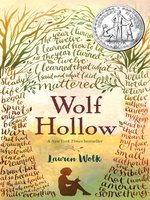
Wolf Hollow by Lauren Wolk gives us a story set in rural Pennsylvania during World War II. Annabelle’s family is not rich, but they are well-off and comfortable within their community. They are also kind and compassionate toward Toby, a WWI soldier who suffers from shellshock, who camps out in an old mill on their property. Wolk weaves a story of bullying, discrimination against both Toby, who is disabled, and the local German peddler; and self-determination on the part of Annabelle, who must make some difficult decisions about how and when to judge others. Many have compared this story to To Kill a Mockingbird and while this is a positive comparison, I feel that it stands on its own because of the strong character development and the integrity of its themes.

Another magical tale was written by Adam Gitwitz, The Inquisitor’s Tale: Or, The Three Magical Children and Their Holy Dog, but he bases this story on realistic events of persecution of the Jews in medieval France. The three children, Jeanne, William and Jacob all have some magical powers and they all stand up for the rights of others. In the climax of the story, the three children risk their lives to save the life of the Queen mother who has foolishly ridden her horse into a sea of quicksand. Queen Blanche, a character based in history, has spent her life persecuting Jews (Jacob), peasants (Jeanne) and Saracens/Africans (William), yet these children cannot stop themselves when she is drowning. A touching tale, told from many different perspectives, gives children and adults words to talk about persecution and oppression. 


Finally, Ashley Bryan has written and illustrated Freedom over Me: Eleven Slaves, Their Lives and Dreams Brought to Life by Ashley Bryan. This short picture book includes poems and drawings depicting the lives of 11 slaves who were sold at auction in 1828. The slaves’ narratives both brief descriptions of their lives and dreams they have for better (non-bondaged) lives are each accompanied by colorful depictions of their faces and their visions. Bryan has researched to present these slaves in a realistic way, not glorifying slavery, yet honoring those who found themselves oppressed by their fellow man. A great tool to show children a part of our history that we must not forget.


Wednesday, January 18, 2017

A little light reading for the cool winter nights!


Hedgehugs and the Hattiepillar by Steve Wilson and Lucy Tapper
Hedgehugs and the Hattiepillar
The hedgehugs are back. Horace and Hattie do everything together. They play games and watch nature; they like to try experiments! After watching a caterpillar go through the metamorphosis into a butterfly, they decide they want to change into something beautiful that can fly as well. So, they do!

How do you say? Como se dice? By Angela Dominguez
How Do You Say? / ¿Cómo Se Dice?
English/Spanish vocabulary with two friendly giraffes. Although there is only one word in English and Spanish on each double page spread, the illustrations and progression of the words tells a story of friendship. An excellent addition for any early childhood classroom with Spanish speakers.

First Light, First Life by Paul Fleischman, illustrated by Julie Paschkis
First Light, First Life
Fleischman and Paschkis have developed this book as a companion to Glass Slipper, Gold Sandal: A Worldwide Cinderella. Following a similar format, this picture book tells the creation story through an amalgam of traditions, including three sections: In the beginning, or how the earth was created; The making of humans; and What happened after the creation of humans. Each of these sections includes at least six creation stories from various places around the globe. Common themes throughout are use of mud/earth/water to create humans and either a fire or flood that destroyed much of the population after a period of time. I found this extremely informative for an adult, yet still engaging for young children. The illustrations are based on folk art traditions from around the world and draw the reader closer to the text.

Hand in Hand by Rosemary Wells
Hand in Hand
Rosemary Wells is well known for her picture books depicting gentle and outgoing animals in bright colors. Hand in Hand gives us an ode to motherhood: “Be my teacher from day one./Be my sky, my moon, my sun.” Simple poetry opining over a mother who is a child’s first teacher accompanies illustrations of the mother rabbit and her little rabbit growing tomatoes, learning to walk, to read and to talk. While the text is written as if the young rabbit is speaking, it is not really what a young child would say to her mother. The endnote is also somewhat didactic, although giving a very positive message. The illustrations are engaging and thoughtful.

How to Build a Snow Bear by Eric Pinder, pictures by Stephanie Graegin
How to Build a Snow Bear
Pinder returns to his theme of Thomas and his little brother, who pretends to be a bear. When a big snow comes, Thomas is excited to make a snowman, but has a hard time waking up his little bear. When the bear finally acquiesces to go outside, he and Thomas have a grand time building a snow bear, sledding on the hill, and making a snow cave. Once again, Pinder has depicted the love between two brothers in a sweet, yet not saccharine way. What fun it is to be a child in Pinder’s imagination!

Puppy by Keith Graves
Puppy!
Told tongue in cheek, this story introduces cave boy Trog who wants a puppy. When he brings home an unidentifiable baby monster, he does everything to make his “puppy” happy and welcome into the family. But, nothing helps, the “puppy” continues to eat everything in sight and cry all day and all night long. Trog’s adventures with his pretend puppy will entertain young and old and Grave’s illustrations will keep a smile on your face. Pay particular attention to the facial expressions of all involved. Perfect!


Monday, January 9, 2017

Winter Books to Push the Blues Away


If you are feeling to cold and that let-down after the holidays, check out a few of these brilliant books, read to yourself or to the little ones in your life, and maybe have a cup of tea from your samovar!

Walking in a Winter Wonderland by Felix Bernard and Richard Smith, illustrated by Tim Hopgood
Changing the words only slightly from the original song, Tim Hopgood has turned this popular winter song into a family adventure in the woods. With brilliantly designed snowflakes, trees and birds peeking out of the woods, this lush representation of a favorite winter song makes us all want to sing along.

Everyone Loves Cupcake by Kelly DiPucchio, pictures by Eric Wight
Metaphorically speaking, that is. Cupcake will do anything to get the other pastries to love her. When she can’t win everyone over, she finally heeds the advice of Fortune Cookie: Be true. Be YOU! When she confesses her shortcomings, the other pastries do as well, leading to my favorite lines of the book: Cheesecake says “I don’t really like New York.” And the donut admits, “Sometimes I feel empty inside.” Enjoy a little fun while helping children learn how to make friends.

A Boy, a Ball and a Dog by Gianna Marino
A simple story of a boy throwing a ball to his dog, with the dog always catching it, until one day, the wind catches the ball (an orange balloon) and blows it out over the sea. Told through a combination of stunning pictures and simple text, the reader follows the balloon out over the sea and back again. Marino has mastered both the use of color and the use of a simple phrase. Even if you don’t have a boy to share this book with, you will love it!

Ninja! Attack of the Clan by Arree Chung
Ninja is back, joined again by his family. What happens when everyone is too busy to play with him, even baby sister? Complete with hide and seek, the kiss of death and a “licking” by little sister, this story is perfect for families who are often too busy to pay attention to each other as they should.

Fairy Friend by Sue Fliess, illustrated by Claire Keane
Using rhyme, Fliess tells how to catch a Fairy while Keane uses soft colors, exaggerated facial expressions and reflected light to illustrate both the fairies and the child chasing them. This magical book will captivate any child’s imagination and if you have a child who loves fairies already, that captivation will be even more enchanted.

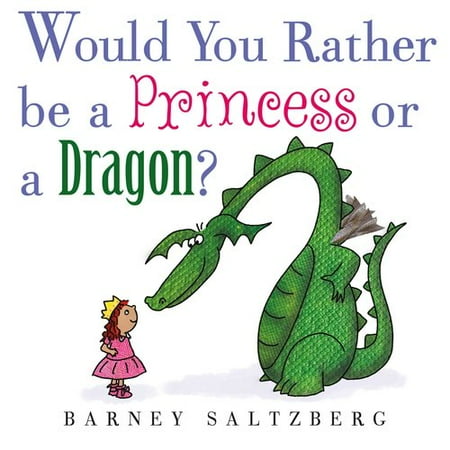
Would you Rather be a Princess or a Dragon? By Barney Saltzberg
Rhyming couplets describe the difference between a princess and a dragon. “If you want to be a princess, / practice walking straight and tall./ If you want to be a dragon/ practice bouncing off the wall.” Saltzberg gives both the princess and the dragon delightful expressions and exuberant personalities. After reading this, I want to be a princess and a dragon.

Grandmother Fish: A child’s First Book of Evolution by Jonathan Tweet, illustrated by Karen Lewis. 
https://ksr-ugc.imgix.net/assets/011/700/180/f0e9d77b03a55e9c02a842b70dc8e12a_original.png?w=1024&h=576&fit=fill&bg=F6FAFA&v=1463686968&auto=format&q=92&s=f29cace018b438e8bf2607bc2a43585e
Following the chain of evolution from a fish to a reptile to a mammal, an ape and finally a human. This is told in the simplest terms, with words and pictures that will charm the youngest child. The endnotes give more sophisticated explanations of evolution, natural selection and additional details on the animals portrayed in the book. This book provides a way to introduce children to an important scientific theory and may start them on their way to becoming scientists themselves.

Leave Me Alone! by Vera Brosgol

Combining old-world illustrations (a grandmother drinking tea from her samovar) with science fiction fantasy (stepping from a mountain onto the moon and from there into a wormhole), Brosgol has created a picture book for all ages! If you have ever felt there are too many people around you; if you have ever had too many chores to complete; if you have ever wanted just a little time and space for yourself, then this book is for you! Enjoy and in the meantime: Leave me alone!

Monday, November 28, 2016

Books for Preschoolers


Puddle by Huewon Yum
 Puddle
Yum has written and illustrated several books for the preschool set. Her characters are drawn with simple lines that lead to extremely expressive faces. The little guy in this story is bored having to spend a rainy day indoors, but the mom encourages him to draw. At first reluctant, the young one is drawn to the picture, literally and figuratively and is soon clamoring to go outside where he can jump in the puddles and enjoy the dreary day. Another hit for the preschool set.

Splashdance by Liz Starin
Splashdance
Starin knows how to take a goofy idea (a bear practicing to win a water ballet contest) and to make it even goofier! First the bear is in, then she is out as no bears are allowed in the pool. Then, after a period of despondency and depression, the bear finds a new group to practice with. And while Ursula’s group puts forth the best performance, they do not win the contest. Ursula’s old partner (a human) and his new partner (a giraffe) win the contest. Because what is more absurd than a bear in the pool? A giraffe, of course!

My Thumb by Karen Hesse, illustrated by Rich Deas
My Thumb
Written in rhyme with a syncopated rhythm, My Thumb is an ode to thumb-sucking. While there are some things this little sucker can’t do with her thumb in her mouth, she is still content to suck away, extolling the virtues of her “soggy, wrinkled, half-baked” thumb. For those little ones who just can’t kick the habit, finally a book that doesn’t try to convince them to give it up.

Daddies are Awesome by Meredith Costain, illustrated by Polona Lovsin.
http://images.macmillan.com/folio-assets/macmillan_us_frontbookcovers_1000H/9781627794527.jpg

Another rhyming book all about daddies. The words are directed at preschoolers with their need to have their hands held and go on adventures; the pictures are all father dogs and puppies of multiple breeds, beagles on one page, spaniels the next. Look this one up next year on Father’s Day!

Marta Big and Small by Jen Arena, illustrated by Angela Dominguez
Marta! Big & Small
A bilingual book that tells a story about Marta with both Spanish and English words. While most of the book is in English, there is a proliferation of Spanish words that are translated either in words or pictures. Makes the use of dual languages seem natural and fun.

Tuesday, November 1, 2016

Books with Friends


Friendship plays a big role in picture books for children. Here are a few of my favorites this month. 
 
Little Elliot:  Big Family by Mike Curato
Little Elliot, Big Family
Mouse and Elliot, a tiny mouse and a small polka-dotted elephant,  are old friends. When Mouse goes off to his family reunion, Elliot is lonely and notices families all over the city. Curato does an excellent job of showing different ethnicities and genders in both his words and his pictures, while focusing on the central point: family members enjoying themselves and one another. Will Elliot get to experience what it is like to be a part of a big family? Read it and see.

Little Elliot: Big Fun by Mike Curato
Little Elliot, Big Fun
Little Elliot and Mouse head out for an amusement park on the edge of the City, depicted like Coney Island of bygone days. The rides overwhelm Elliot and they have a hard time finding something that is not too fast, or wet or dizzy. But, when they finally take a chance on the giant Ferris Wheel, they (and the reader) are rewarded with a stupendous view of the city from the top. But, the best is when Little Elliot asks Mouse what his favorite part of the day is, and Mouse replies, “Being with you.” True friends, nothing better!

Best Frints in the Whole Universe by Antoinette Portis
Best Frints in the Whole Universe
What is a frint, you may ask? While this book will give you some hints, the answer lies in the mind of the reader. Best frints on Planet Bobarp do not act like best friends on Planet Earth, which this book makes perfectly clear. For all those parents and teachers who are dealing with friends and siblings who are sometimes enemies, this might be a lighthearted way to start a conversation without making a big deal about childish behaviors.

Bossy Flossy by Paulette Bogan
Bossy Flossy
What happens when Bossy Flossy meets Bossy Edward on the school playground? Do they both stop their bossy ways and become best friends? Well, not exactly, but they do start to recognize what it feels like to be bossed around. Which is always a good thing and maybe a friendship does develop. Have fun reading and hope you don’t recognize yourself in this book!


Hill and Hole are Best Friends by Kyle Mewburn, illustrated by Vasanti Unka
http://images.macmillan.com/folio-assets/macmillan_us_frontbookcovers_1000H/9781250076373.jpg
Hill and Hole live side by side and talk to each other about the world around them. When the time comes that they want to experience the world from another perspective, they enlist the help of Mole who moves the earth to make Hole a hill and Hill a hole. And that’s where it gets a little confusing as Hill the hole talks to Hole the hill.. How many friends want to be just like their best friend and experience life as their friend does? How many of us actually get to do this? While Hill and Hole enjoy switching roles, they soon want to switch back, asking now for the help of Wind, who wisely says, “Sometimes it is easier to do things than to undo them once they’re done.” How true! What appears as a simple story is a metaphor that could be used with children at almost all grade levels. Deep!

Maggie and Michael Get Dressed by Denise Fleming
Maggie and Michael Get Dressed
Fleming is one of my favorite illustrators for children’s books these days. Her drawings are realistic, yet appear to be simple and are amazingly easy to imitate, making me feel like an artist myself! Michael is a toddler who is supposed to be dressing himself, but instead is helping his puppy, Maggie, put on all his clothes. Toddlers who hear this story are learning colors, names of clothing and some body parts. Clever!

Wednesday, June 22, 2016

Poetry and other books for summer reading


Summer time, time for relaxing, reading and reflecting. Some good books of poetry as well as other fun books to read aloud on these lazy days. Enjoy!
Wet Cement: A Mix of Concrete Poems by Bob Raczka
 Wet Cement
Concrete poems are those that give a visual representation of what the poem is about. One of my favorite was a circle of words: Hola! Gutentag! Boujour! Welcome to the circle tour. No one needs a ticket here. We take this trip every year. Bon voyage! It’s nonstop fun as earth revolves around” And then in the middle, a smaller circle with just the words: “the sun.” So many poems, so many word pictures! So much inspiration!

When Green Becomes Tomatoes: Poems for All Seasons by Julie Fogliano, 
Pictures by Julie Morstad
When Green Becomes Tomatoes
Poems for every season, each one labeled with a date to give it a personal touch. Mostly free-verse, some just a few words and some list poems, like this one for March 24: what the snow left behind/was a red scarf/next to a wooden carrot/one blue mitten/a big snow shovel/a little snow shovel/and mud/and mud/ and mud/ and more mud/and muddy mud/and mud
These poems were made for sharing and for imitating, sometimes for laughing and always for thinking.

Good Night Truck by Sally Odgers, Illustrated by Heath McKenzie
Good Night, Truck
A modern version of Good Night Moon, with rhyming couplets about all kinds of transportation: trucks, diggers, tractors, boats. All of these are anthropomorphized with shining eyes and crazy eyebrows, drawn in off-beat colors that fit with the busy colorful backgrounds. In the end, all the vehicles are tucked in for the night and the truck gets to cozy down with the narrator as he/she snuggles in bed.

And now for a touch of whimsy, or if you prefer, just plain silliness!


Music Class Today! By David Weinstone, Pictures by Vin Vogel
Music Class Today!
David Weinstone started teaching Music for Aardvarks almost 20 years ago. His interactive music classes are illustrated herewith whimsical, multi-generational and multi-racial participants. One of Weinstone’s CDs would have made a nice addition to this book, as the major focus of the story is left to our imagination.

Bunny Dreams by Peter McCarty
Bunny Dreams
What do bunnies know? What do bunnies dream? This whimsical story takes us through the day and night of a group of bunnies, whose names all begin with B. On each page, the bunnies are drawn to represent different scenarios, sometimes with letters on their bodies, sometimes with wings. But, my favorite pages are the ones where the bunnies are wearing little striped sweaters to make them look like they are bumble bee bunnies. Kind of weird, but in a good way!

The Fintastic Fishsitter: A Big Fat Goldfish Adventure by Mo O’Hara, Illustrated by Marek Jacucki
The Fintastic Fishsitter
What I liked about this book:
1.     The main characters are Indian-American, you don’t find that in children’s books, maybe never!
2.     The other characters are a zombie fish and a clever cat, you might find these in other children’s books, but rarely together.
3.     The fish and the cat are both kind of evil, but the girl prevails in the end, getting them to play nicely together.
4.     The humor is not lost on adults or little ones.
Is that enough? Try it, you’ll like it!

Go, Little Green Truck! By Roni Schotter, pictures by Julia Kuo
Go, Little Green Truck!
Little Green is a useful pick-up truck who is displaced by Big Blue when Farmer Gray’s farm grew. Little Green is now lonely, sitting to the side and not being driven. Until finally one day, Fern (notice the name of the farmer’s daughter, sound familiar to you children’s book lovers?) finds lonely Little Green and determines that this truck should be used for trips to the Farmers’ Market. All ends well, with Little Green once again feeling useful! Lots of metaphors here as well as luscious pictures of the farm, all the animals and vegetables! And who can not fall for a book with a farmer’s daughter named Fern?

Let’s Go to the Hardware Store by Anne Rockwell, illustrated by Mellissa Iwai
 Let's Go to the Hardware Store
Buying a new house means a trip to the hardware store, for sure, so Daddy sets out to get what he needs, accompanied by Flora and the narrator, a little boy who remains unnamed. They explore and buy a myriad of tools that are clearly illustrated and labeled. They even get a birdhouse kit at the end of the trip. But, they forgot the one thing Mommy asked for: picture hangers. So off they go again to the hardware story. Anyone who has ever done any DIY in the home knows how important the trips to the hardware store are!